
Journey Guides · Journey Planning
Group airport transfers Sydney: how to book one right
Discover how to book reliable group airport transfers in Sydney for a seamless arrival experience, ensuring comfort and convenience for your group.

For groups arriving at Sydney Airport, a pre-arranged private transfer is usually the most reliable and comfortable way to get everyone moving together. Book it before you land, not after. Daima Journey runs group airport transfers across Sydney with two service levels, Everyday and Premium, both built around the same basics that matter for a group: flight tracking, meet-and-greet at the terminal, and a vehicle sized for your headcount and luggage.
The practical case for pre-arranging comes down to a few things you can’t easily get from a taxi rank or a string of rideshares:
- Live flight monitoring, so the pickup adjusts to your actual landing time, not the scheduled one.
- A driver waiting with a nameplate at the terminal, which matters when your group includes people who’ve never met the driver before.
- A vehicle matched to your group size and bags, so nobody’s left standing at the curb wondering how everyone’s going to fit.
Key Takeaways
Reliable group airport transfers in Sydney depend on matching vehicle size to headcount and luggage, planning around the T1/T2/T3 terminal split, and confirming flight tracking with the operator before travel.
| Point | Details |
|---|---|
| Match vehicle to group | Size the vehicle band using headcount times average bags per person, plus bulky items. |
| Supply full flight details | Give the operator flight numbers, terminal, headcount and luggage estimates when booking. |
| Plan for terminal split | T1 and T2/T3 sit on opposite sides of Sydney Airport, so mixed-terminal groups may need staged pickups. |
| Confirm waiting policy upfront | Ask how grace periods and extended delays are charged before you pay a deposit. |
| Book Daima Journey for coordination | Daima Journey offers Everyday and Premium group transfers with flight tracking and meet-and-greet included. |
Which vehicle suits your group size and luggage load?
Get the vehicle band wrong and you’ll either overpay for empty seats or run two trips because the bags won’t fit. Sydney operators generally work with five rough bands:
- Sedan or SUV – fine for two to four VIPs or a small executive party with light bags.
- People-mover or 8 to 13 seater maxi van – the sweet spot for extended families or small work teams.
- Minibus (12 to 25 seats) – common for wedding parties, school groups and mid-size corporate teams.
- Mid-size coach (30 to 45 seats) – suited to conference groups or sports teams travelling as one unit.
- Full coach (50+ seats) – large event cohorts, tour groups, big school excursions.
Luggage is where groups usually underestimate. A netball team with kit bags, or a family with prams and golf clubs, needs more boot space than the seat count suggests. Bulky items like instrument cases, sporting equipment or extra strollers can bump you up a vehicle band even if the headcount stays the same.
If your group is arriving on one flight and travelling to one destination, a single consolidated vehicle is almost always simpler and cheaper than splitting across multiple cars. Multiple vehicles only make sense when arrival times are staggered by hours or the group is heading to different suburbs.
A quick way to size it: headcount × average bags per person, plus any bulky items, then match that total against the vehicle bands above.
Pro Tip: If you’re unsure between two vehicle bands, size up rather than down. A slightly bigger van with room to spare beats a squeeze where someone’s holding a bag on their lap for the whole trip.
What information does the operator actually need from you?
Accurate quotes and smooth pickups both depend on giving the operator the right details upfront. A practical logistics plan for group transfers starts with five essentials: group size, arrival schedule, luggage volume, pickup location, and destination.
When you book, be ready to supply:
- Flight numbers and scheduled arrival or departure times for everyone in the group.
- The terminal (T1 international or T2/T3 domestic).
- Total passenger count, including children.
- A realistic luggage estimate, including anything oversized.
- A contact number and any special requirements (accessibility, child seats, medical needs).
Each of these matters operationally, not just administratively. The terminal, for instance, decides whether one vehicle can realistically manage your whole group or whether you need staged pickups. Luggage estimates decide the vehicle band. Special requirements decide whether the driver arrives with the right equipment already fitted.
It helps to designate one person as the trip lead: someone who holds the full passenger list, exchanges mobile numbers with the driver, and agrees on a specific, detailed meeting point (a labelled pillar or door number, not “meet outside baggage claim”), a point group transfer planning guides flag as one of the most common sources of confusion at pickup.
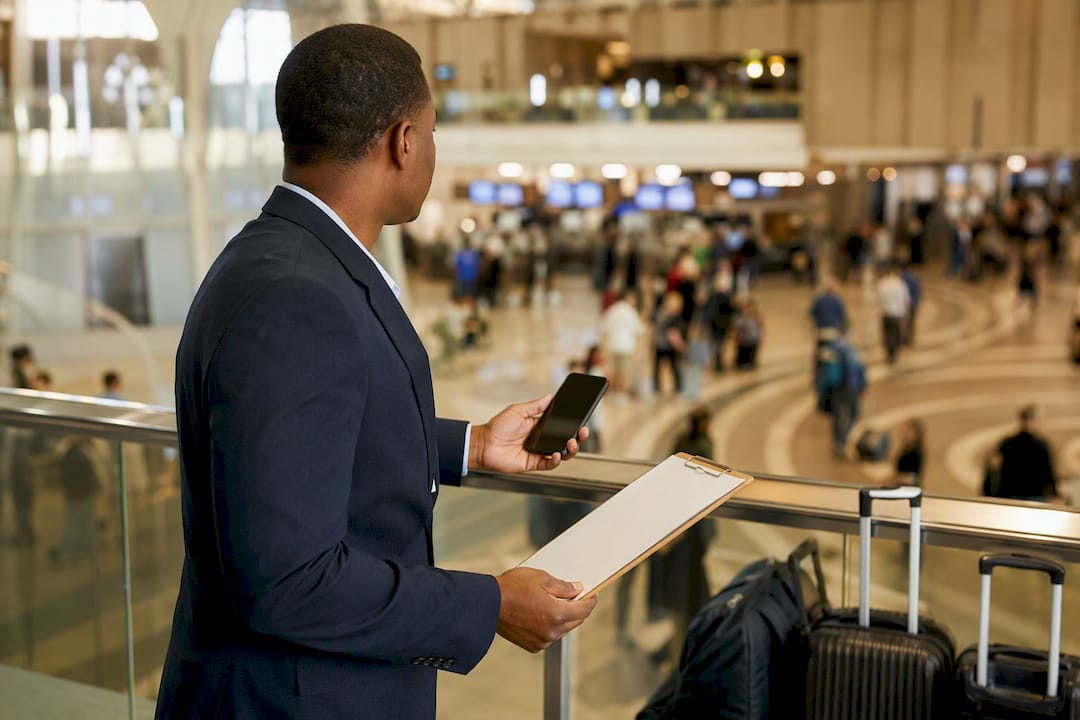
In return, a reliable operator should confirm flight monitoring, a direct driver contact number, the vehicle band assigned, and the waiting-time window included in your fare.
Pro Tip: Save the driver’s number in your phone before you land, not after you’re standing at arrivals with a dead battery and four kids asking where the car is.
Why does T1 versus T2/T3 matter for group pickups?
Sydney Airport’s international terminal (T1) and its domestic terminals (T2/T3) sit on opposite sides of the runways. They are not a short walkable link, and travelling between them can take longer than the transfer itself. For groups arriving on different flights, this split matters more than it first seems.
If half your group lands at T1 on an international flight and the other half at T2 on a domestic connector, one vehicle generally cannot collect everyone in a single pass. You’ll need either a staged pickup, where the vehicle collects one group first and loops to the second terminal, or two separate pickups timed against each flight.
Large vehicles also don’t have the luxury of loitering. Coach and minibus operators use designated pickup bays rather than general kerbside, and drivers can’t idle indefinitely waiting on a delayed flight. That’s why staging plans and buffers for delays matter more for coaches than for a standard sedan pickup.
Sample transfer times from Sydney Airport give a sense of what to expect: typically a short transfer to the CBD, a somewhat longer trip to Parramatta, a moderate drive to Bondi Beach, and a considerably longer journey to the Blue Mountains. Those figures shift with peak-hour traffic, major events, or cruise ship departure days, when the Fox Bus Group Transfers team notes congestion around the airport precinct can add considerably to trip times.
When flights land hours apart, grouping them into two or three collection waves rather than one continuous shuttle often works out cheaper and easier to manage than constant back-and-forth runs.
What should you expect on pricing and waiting time?
Group transfer pricing generally comes down to four factors: the vehicle band booked, the distance or time of the trip, any waiting time beyond an agreed grace period, and surcharges for after-hours pickups or major events.
Most reliable operators build in a grace period, typically covering the time it takes to clear customs or baggage after landing, before extra waiting is charged. Ask specifically how extended delays are handled: some operators charge in set increments, others quote a flat additional fee once you’re past the grace window.
Before the day, expect a few confirmation steps:
- A pre-travel reconfirmation call or message, usually the day before or morning of.
- Active flight monitoring so the pickup time adjusts automatically to delays.
- Driver details shared in advance, including a direct contact number.
Payment for group bookings is usually settled as a single invoice covering the whole group, which is one of the practical advantages over splitting the cost across several individual rideshare fares. Ask upfront whether the quote is all-inclusive or whether tolls, waiting time, and surcharges are itemised separately.
How do you handle kids, accessibility and special gear?
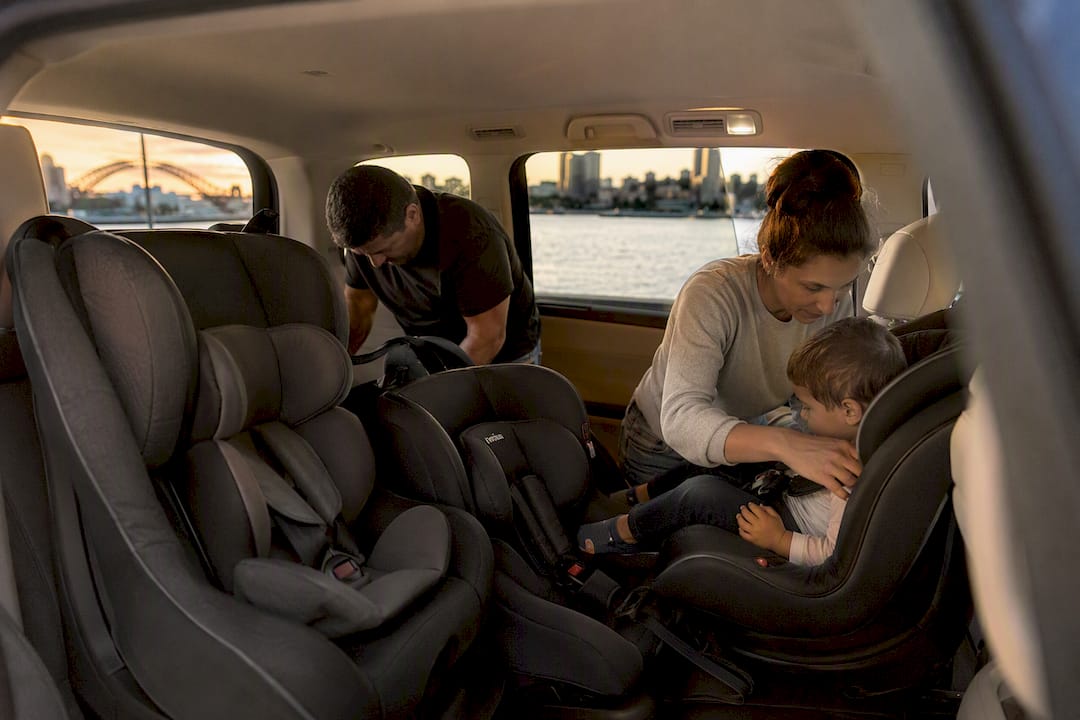
Tell the operator exactly how many child seats you need and the age or weight of each child, since Australian child-restraint laws require age-appropriate restraints and not every vehicle carries every size as standard.
If anyone in your group uses a wheelchair, ask specifically about accessible vehicle capacity. Not every minibus or coach has wheelchair provision, and those that do often carry fewer total passengers as a trade-off.
Flag bulky items early too: sports equipment, musical instruments, or event crates change what fits and how loading works.
Pro Tip: For school or family groups, label bags by name and plan the loading order before the vehicle arrives. It saves a chaotic scramble at the curb.
Coach, rideshare or public transport: which fits your group?
- A dedicated coach or minibus gives you one invoice, one driver handling all the luggage, and a group that arrives together. That control is worth paying for when you’re managing a wedding party, a school excursion or a conference cohort on a tight schedule.
- Multiple rideshares can be cheaper for small, flexible groups without much luggage, but they split everyone up, and pricing during peak periods or major events is unpredictable. Transport for NSW’s guidance on getting to and from the airport covers current fare structures worth checking before you commit to this route.
- Public transport works for solo travellers or pairs with light bags, but it’s a poor fit for groups juggling suitcases, kids or tight connection windows.
If your priority is a rigid timeline, a fixed budget, heavy luggage, or keeping the group together, a pre-arranged vehicle removes the guesswork that comes with peak-time surge pricing or a train platform full of luggage trolleys.
How Daima Journey runs group airport transfers
Daima Journey offers two levels for group and family bookings. Everyday suits practical group runs, school pickups, family arrivals, where comfort matters more than presentation. Premium suits corporate teams or event cohorts where a polished arrival counts, with a private driver focused on presentation as much as punctuality.
Every group booking follows the same workflow: you supply flight numbers, terminal, headcount and luggage details, Daima Journey reviews them and returns a personalised quote, then confirms the booking with flight tracking and driver contact details shared ahead of travel.
A group transfer only works if the plan is agreed before the wheels land, not worked out at the curb.
Daima Journey also covers longer runs beyond the airport gate, including Sydney to Newcastle and transfers into the Blue Mountains, useful for groups continuing on to a conference venue or a family gathering outside the city.
What happens if plans change: cancellations and rescheduling
Flights get delayed, headcounts shift, and events move. Ask any provider upfront how they handle changes, because policies vary widely between operators.
Most reliable group transfer services will let you reschedule a booking with reasonable notice, often without penalty, provided you’re not asking for a change hours before pickup. Cancellations closer to the travel date, particularly for larger vehicles like coaches or minibuses booked well in advance, are more likely to carry a partial or full charge, since the operator has held that vehicle and driver against your booking.
Get the specifics in writing before you pay a deposit:
- How much notice is required for a free reschedule versus a charged one.
- Whether a partial deposit is refundable if you cancel outright.
- What happens if your flight is delayed by hours rather than minutes, and whether that counts as a schedule change or falls under the waiting-time policy instead.
- Whether headcount changes (say, losing two passengers from a group of fifteen) trigger a re-quote.
For group bookings specifically, ask whether the policy differs from an individual airport transfer. A single-passenger sedan booking is easy to shuffle; a 40-seat coach booked for a conference departure is a different commercial proposition for the operator, and cancellation terms often reflect that. Daima Journey handles this through direct communication rather than a rigid published schedule: you review the terms in your personalised quote before confirming, so there’s no ambiguity about what a late change will cost.
How do you know a group transfer provider is actually reliable?
Reviews are a starting point, not the whole picture. Look past the star rating and read what people actually say about group bookings specifically, since a provider can handle single-passenger transfers well but struggle with coordinating multiple vehicles or large luggage volumes.
Confirm licensing and insurance directly rather than assuming it. In New South Wales, passenger vehicles operating for hire need appropriate accreditation, and a legitimate operator should be able to confirm this without hesitation when asked. If a provider is vague or defensive about licensing questions, treat that as a warning sign.
Check these specific points before committing:
- Whether the operator has genuine experience with group sizes matching yours, not just solo airport runs.
- Whether pricing is transparent upfront, with a written quote before you pay anything.
- Whether they offer flight tracking as standard, not as a paid extra.
- How they handle a mixed-terminal group, since this trips up less experienced operators.
- Whether drivers carry public liability insurance and appropriate vehicle registration for passenger transport.
A provider with a clear cancellation policy, a named contact for your booking, and a willingness to answer detailed questions before you pay a deposit is generally a safer bet than the cheapest quote with vague terms attached.
What should you ask before you book?
A short conversation before you commit can save a stressful pickup day. Worth asking directly:
- “How do you handle a group split across T1 and T2/T3 on different flights?”
- “What’s included in the waiting-time grace period, and what happens if we go over it?”
- “Can you confirm the exact vehicle and seat count before the day, not just on arrival?”
- “What child restraints or accessibility equipment do you carry, and do I need to request them in advance?”
- “Is the quote a single invoice for the whole group, and does it include tolls and surcharges?”
- “What’s your policy if our flight is delayed by several hours?”
The answers tell you a lot about how the operator actually runs, not just how they market themselves. A provider who answers specifically, with real numbers and named policies rather than vague reassurance, is generally the one worth booking.
Group airport transfers made simple with Daima Journey
Daima Journey exists for exactly this situation: a group landing in Sydney who need one organised, comfortable way to get where they’re going without the hassle of splitting into cars or juggling a coach hire company’s booking form.
Where a mixed fleet of rideshares means paying peak surge pricing and hoping everyone’s driver shows up on time, Daima Journey coordinates the whole group as one booking, with a vehicle matched to your headcount and luggage, and a single point of contact from quote to pickup. Everyday suits family arrivals and practical group runs; Premium suits corporate teams or event groups who want the arrival to look as good as it feels. Both options include flight tracking and a driver waiting with your name at the terminal, whichever side of Sydney Airport you land on.
If you’re organising a group transfer, start with a pre-arranged airport transfer quote and supply your flight details, headcount and luggage estimate. Daima Journey reviews the specifics and confirms a plan before you travel, so the only thing your group needs to do on arrival is walk out and find the driver waiting.
Frequently asked questions about group airport transfers in Sydney
How far in advance should I book a group airport transfer in Sydney?
Book as soon as your flight details are confirmed, particularly for larger vehicles like coaches or minibuses. Popular event weekends and school holiday periods fill vehicle availability faster than off-peak dates.
Can one vehicle collect a group arriving on different flights?
Sometimes, but it depends on timing and terminal. If flights land close together at the same terminal, one vehicle can usually manage it. Flights split across T1 and T2/T3, or landing hours apart, generally need a staged pickup or separate vehicles.
What happens if our flight is delayed?
A provider offering flight tracking will monitor your actual arrival time and adjust the pickup accordingly, rather than working off the original schedule. Confirm this is standard practice, not a paid add-on.
Is a private group transfer cheaper than several rideshares?
It depends on group size and distance, but a single vehicle and invoice often works out comparable to or cheaper than multiple rideshare fares, especially during peak pricing periods, and it avoids splitting the group.
Does Daima Journey travel beyond Sydney Airport to other regions?
Yes. Daima Journey also runs private transport to Newcastle and the Blue Mountains, useful for groups continuing on from the airport to a regional venue or gathering.
Sources
- Airport Minibus Transfers to & from all Australian Airports — Fox Bus Group Transfers
- Airport Bus Hire Sydney | PLAN B Transport
- Transportnsw
- How to build a group airport transfer plan — Charter a Coach